Video is the backbone of digital marketing and communications, but it’s not just about “standing out” anymore. It’s about who your target audience is, where they consume content, and how to meet them there.
Most importantly, what do you want them to do or take away from your video? Are you trying to build a stronger relationship with your audience? Drive sales? Speak to employees or internal audiences?
Whoever you identify as your audience, focus on telling your story.
People remember stories, not bullet points.
Focus on what’s important and let your website do most of the talking.
Follow a clear narrative arc.
Build a transformation from problem to solution to outcome.
Respect attention spans (1–2 minutes).
Avoid over-polished scripts with clear language and honest positioning.
Who is going to be on camera?
While defining the story you are trying to tell is critical, choosing the right spokesperson is equally important. Your instinct may be to choose a senior executive by default, but it’s not that simple. Hierarchy within the organization doesn’t always translate to effectiveness on camera.
Is your first choice comfortable in front of the camera?
This seems obvious, but comfort on camera is not guaranteed, even at an executive or senior level. The delivery matters just as much as the messaging.
Someone may be highly articulate in meetings or deeply knowledgeable in their field, yet struggle in front of the camera. That’s because, for most people, talking on camera is not an easy job! Hesitation, stiffness, and uncertainty is amplified on video, and the audience can feel it.
In the end, you need to evaluate your choice as follows:
Can they be Clear, Confident, and Credible on video (the three C’s!)?
Do they have a strong understanding of the material?
Are they experienced on camera, and have you screen-tested them?
Deliver your message on-brand and on-tone
Your spokesperson will be the face of your message. Their tone, demeaner, and approach will influence how your audience feels about your message. The goal of your video should influence the choice of your spokesperson.
The delivery matters just as much as the messaging.
Recipe for success
Choose the person who can confidently speak to:
Your audience
The problems your audience faces
The solutions you will deliver
Sometimes that person is your CEO—especially for vision-setting, organizational change, public accountability, or high-level stakeholder messaging. But sometimes it isn’t.
If the goal is education, training, product credibility, or internal communications, maybe a subject-matter expert is a stronger choice. The engineer, the carpenter, or the program lead—someone close to the work. Make an honest evaluation. Go back to the three C’s. Give them a chance to try the part first. And if they’re a fit, you’re ready to go.
Most people aren’t professional actors, and that’s a good thing! Viewers respond best to real people who they can relate to.
If, after considering all your options, you don’t think you have a candidate on your team that will be confident or comfortable on camera, consider hiring a professional actor instead.
Actors are trained communicators. They can internalize a script quickly, adjust tone on cue, and deliver multiple takes with steady energy. In high-stakes campaigns or tightly scripted messaging, that level of control can make all the difference.
Practice and prepare
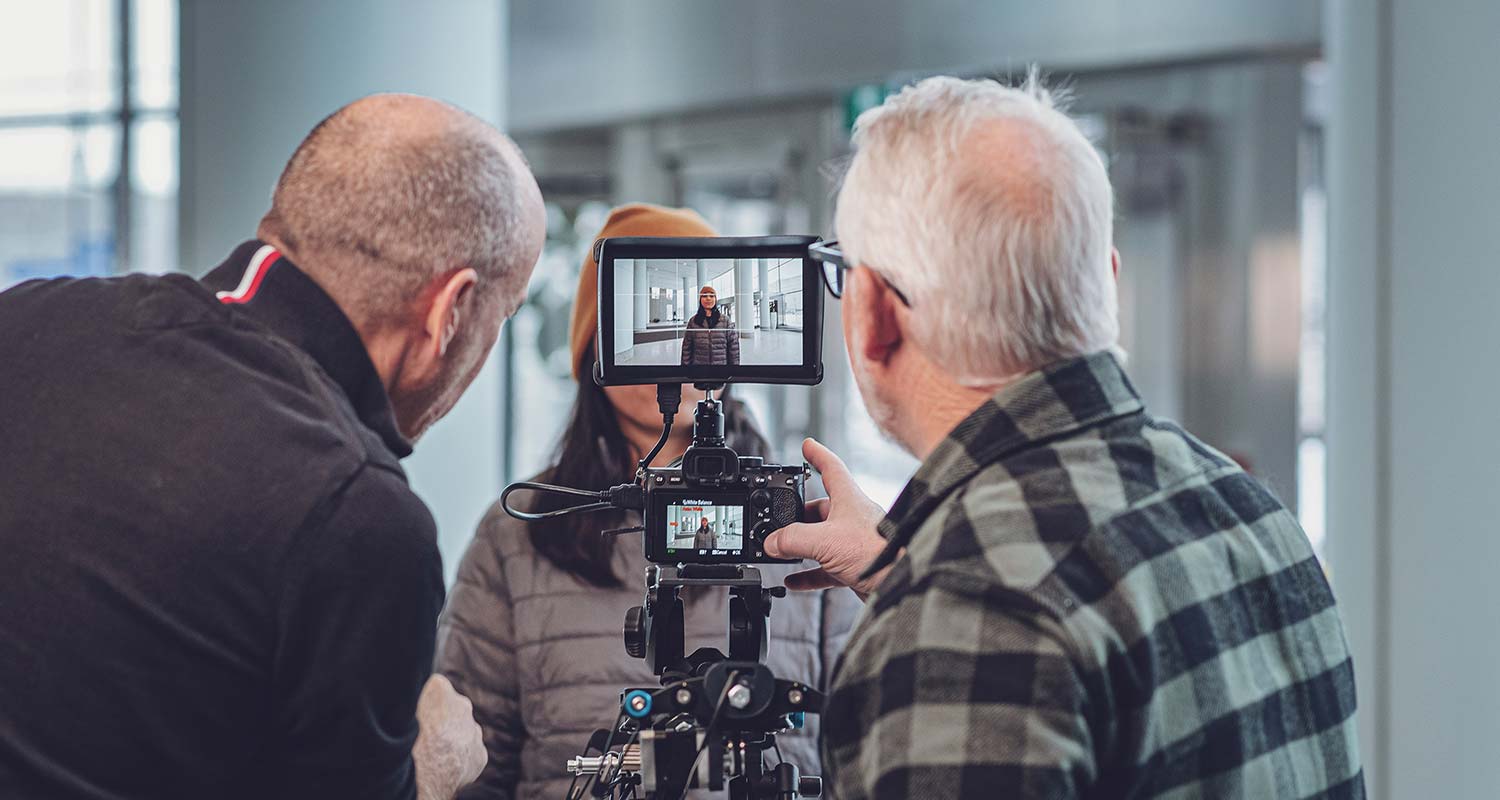
When your spokesperson knows what to expect, their performance improves dramatically. We recommend a healthy dose of practice, whether in front of a mirror or filming a run-through on a cellphone. Get familiar and find that flow!
To get started, they need to know what kind of spoken narrative they are delivering.
Let’s explore a few:
Candid interview
The goal is credibility, not perfection. If you’re being interviewed off-the-cuff or filming candid content, you need to focus on the key messages that need to be hit, rather than memorize your answers word-for-word. The whole point of a candid interaction is to be authentic and “in the moment”, but that doesn’t mean you shouldn’t prepare.
Focus on simplifying the larger complex ideas—not memorizing paragraphs. Get familiar with key themes and talking points you’ll be expected to speak to, so you can deliver them organically and conversationally on camera. Try practicing in front of the mirror or with another person, and remember to be yourself!
Teleprompter
Speaking with a teleprompter is a skill on its own, and when done well, it looks effortless. You don’t have to memorize your lines since you’ll be reading them directly, but you still have to practice your delivery to ensure you appear natural.
You don’t want to appear stiff or monotonous, and you don’t want it to seem obvious that you’re reading your lines from a screen.
Run through the script ahead of time so you can perfect your performance. Good tone and pacing are critical. Once again, record a run through first, so you can see and hear if you need to make any changes. We often ask our subjects to amplify their tone and to be more expressive during shoots. A little extra inflection in the voice, or slightly warmer facial expressions can make a big difference on camera.
After rehearsal, flag any parts of the script you might want to change. Note where natural pauses should fall in your sentences, hold a consistent pace, and remember to breathe between your sentences.
Scripted
If your production absolutely requires the spokesperson to stick to tightly scripted lines, hiring a professional actor is recommended. We wouldn’t recommend putting one of your own staff up to this task, unless they have the demonstrated skillsets and are willing.
At a professional level, scripted acting requires a lot of discipline, memorization, and much more experience than a few run-throughs in the mirror.
If hiring an actor is out of budget, and you believe your scripted pieces are short enough to be delivered by a member of your team, we’d advise them to memorize structure, not sentences. Think of the script in segments and rehearse each section. The more rehearsed, the more you can focus on other aspects without freezing up, like ‘feeling’ the content, your facial expressions, body language, and the tone of voice.
Pro tip:
Practice in front of a mirror. Record yourself on your phone. Watch it back. Identify your on-screen habits, like pacing, filler words, or distractions that you want to work on eliminating.
Wardrobe & Grooming
Looking the part is important too. Your spokesperson’s wardrobe should support your message, not compete with it. Busy patterns, loud colours, or overly trendy pieces can pull attention away from what’s being said. When viewers focus on an outfit instead of the message, clarity suffers. Subtle, polished, and professional usually wins on camera.
Be yourself, but keep your hair and make-up as neutral as possible unless instructed otherwise ahead of time, giving the production crew a blank slate to work with. If we need to add a little powder, or adjust your hair on set, we can do that.
Avoid loud colours, patterns or logos to eliminate distraction and maintain aesthetic.
Avoid pure white or deep black, since both create challenges under lights. Pure white acts like a light source, often causing “blown-out” or “washed-out” highlights, whereas deep black absorbs light, causing “crushed shadows” that lose detail.
Choose mid-tones, such as navy, olive, grey, or muted blues.
Most importantly, always bring extra clothes as a backup option in case your outfit isn’t working on camera. What you think works might not translate on camera, and the production team may want to experiment with different looks.
Location & Environment
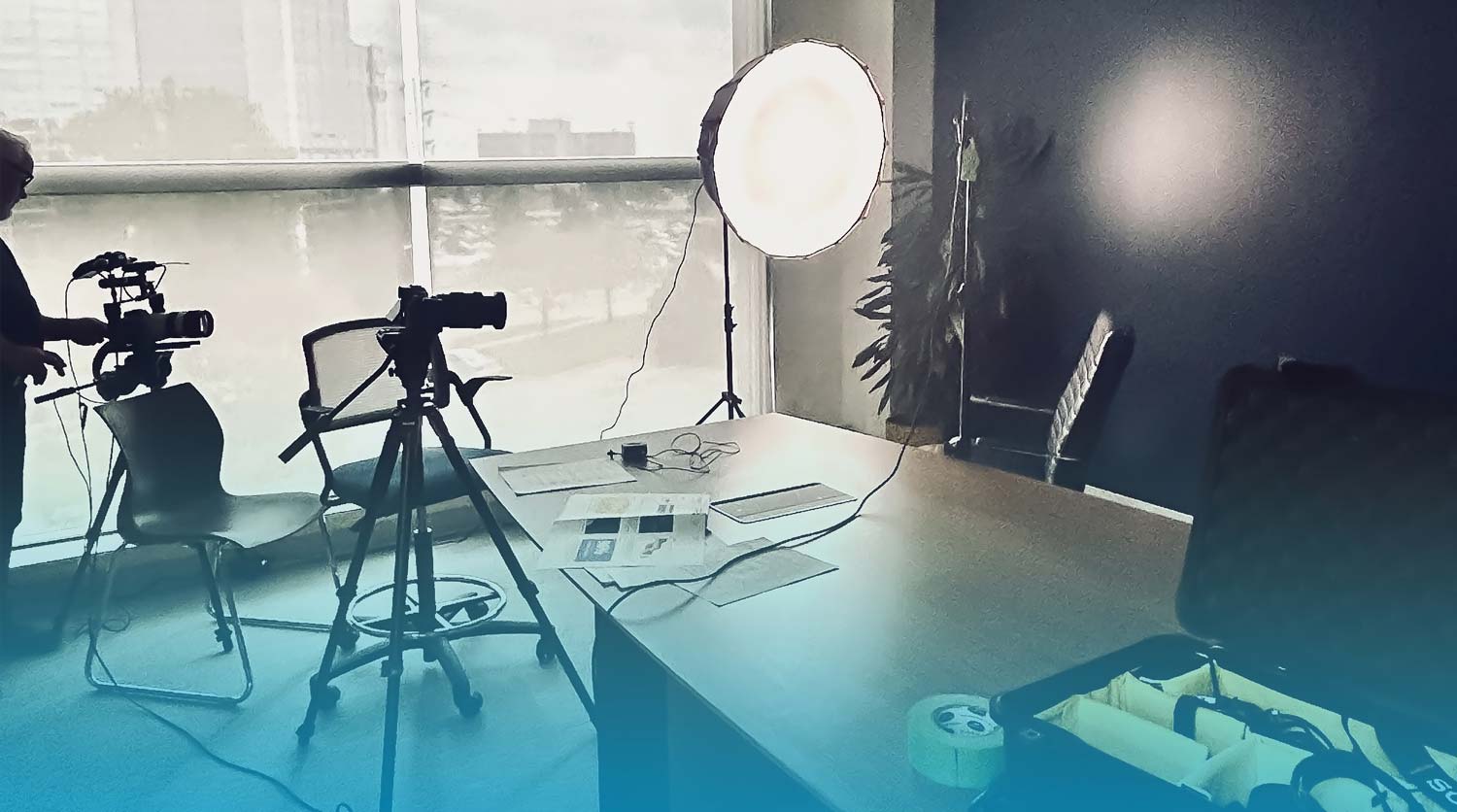
Choosing the right place to shoot also has an impact. Unexpected interruptions can force retakes, delay schedules, and extend production hours. A controlled environment saves time, protects audio quality, and makes everyone’s lives easier. When the space is prepared in advance, the team can focus on performance instead of problem-solving. The production team will be able to guide this process, but if you’re shooting at your office, for example, you should consider some options before film crews arrive:
Reduce clutter in the background of the shot to avoid visual distraction
Silence phone notifications, avoid areas where HVAC fan noise is noticeable, and avoid heavy traffic areas to eliminate sound interference
Inform your staff ahead of time so they can respect the shooting space, and/or designate a quiet area away from common spaces to avoid interference
Ensure your location will be camera-friendly before the shoot begins.
And that’s it! As long as your spokesperson is prepared, the objective is clear, and the format matches your goal, you should hit a homerun.
Ready for your next shoot? We’re here to help. Let’s chat.
Megan Landry is an award-winning filmmaker, musician, producer and writer passionate about pushing the envelope and thinking outside the box. From shooting and editing to animation and stop-motion, Megan has touched every area of motion and continues to pioneer new mediums.
Among various awards in music and filmmaking, Megan’s solo animation work has participated in several film festivals and won in three.